Modulation Spectroscopy Evaluation via Headspace Gas Ingress by Using Frequency Method Development for Container Closure Integrity
来源:
|
作者:pmo90dc87
|
发布时间 :2018-08-16
|
2792 次浏览:
|
🔊 点击朗读正文
❚❚
▶
|
分享到:
Method Development for Container Closure Integrity Evaluation via Headspace Gas Ingress by Using Frequency Modulation Spectroscopy
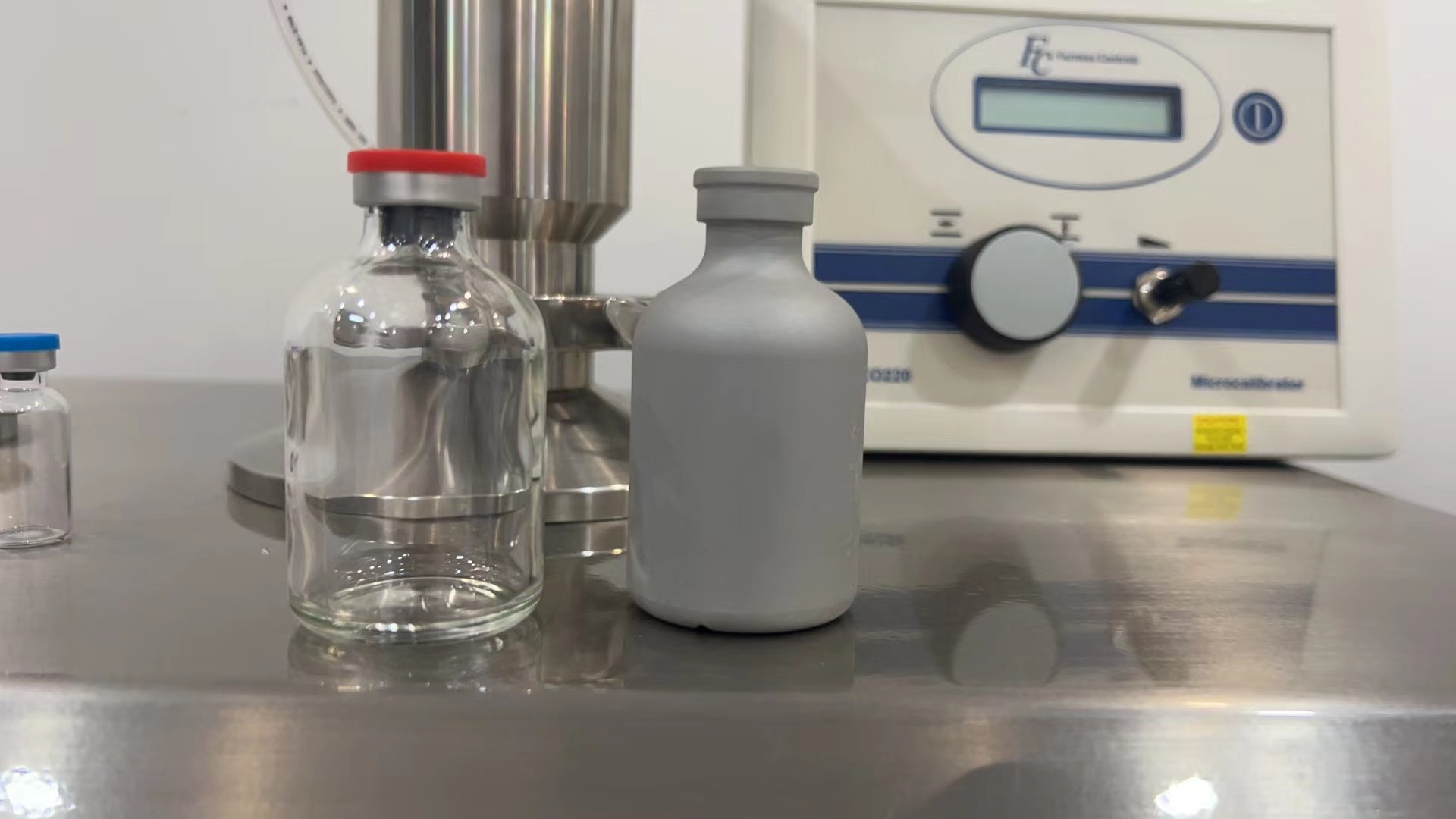
ABSTRACT: USP �1207.1� Section 3.5 states that “A deterministic leak test method having the ability to detect leaks at the product’s maximum allowable leakage limit is preferred when establishing the inherent integrity of a container-closure system.” Ideally, container closure integrity of parenteral packaging would be evaluated by measuring a physical property that is sensitive to the presence of any package defect that breaches package integrity by increasing its leakage above its maximum allowable leakage limit. The primary goals of the work presented herein were to demonstrate the viability of the nondestructive, deterministic method known as laser-based gas headspace analysis for evaluating container closure integrity and to provide a physical model for predicting leak rates for a variety of container volumes, headspace conditions, and defect sizes. The results demonstrate that laser-based headspace analysis provides sensitive, accurate, and reproducible measurements of the gas ingress into glass vial-stopper package assemblies that are under either diffusive or effusive leak conditions. Two different types of positive controls were examined. First, laser-drilled micro-holes in thin metal disks that were crimped on top of 15R glass vials served as positive controls with a well-characterized defect geometry. For these, a strong correlation was observed between the measured ingress parameter and the size of the defect for both diffusive and effusive conditions. Second, laser-drilled holes in the wall of glass vials served as controls that more closely simulate real-world defects. Due to their complex defect geometries, their diffusive and effusive ingress parameters did not necessarily correlate; this is an important observation that has significant implications for standardizing the characterization of container defects. Regardless, laser-based headspace analysis could readily differentiate positive and negative controls for all leak conditions, and the results provide a guide for method development of container closure integrity tests.
KEYWORDS: Container closure integrity, USP 39 Chapter �1207�, USP 1207, Sterility, Gas leak rate, Gas ingress, Headspace analysis, Frequency modulation spectroscopy.